Water for Espresso: Why Your Tap Water Is Wrecking Your Shots (2026)
As an Amazon Associate I earn from qualifying purchases. Prices and availability are accurate as of the date/time indicated and are subject to change.
🔍 How this guide was put together (Editorial Standards)
This guide compares options using published manufacturer specifications, patterns in publicly visible owner reviews, and reputable expert sources. We do not operate a physical testing lab; see our how-we-research page for details.
EDITOR'S PICKS
Top Picks

📑 Table of contents
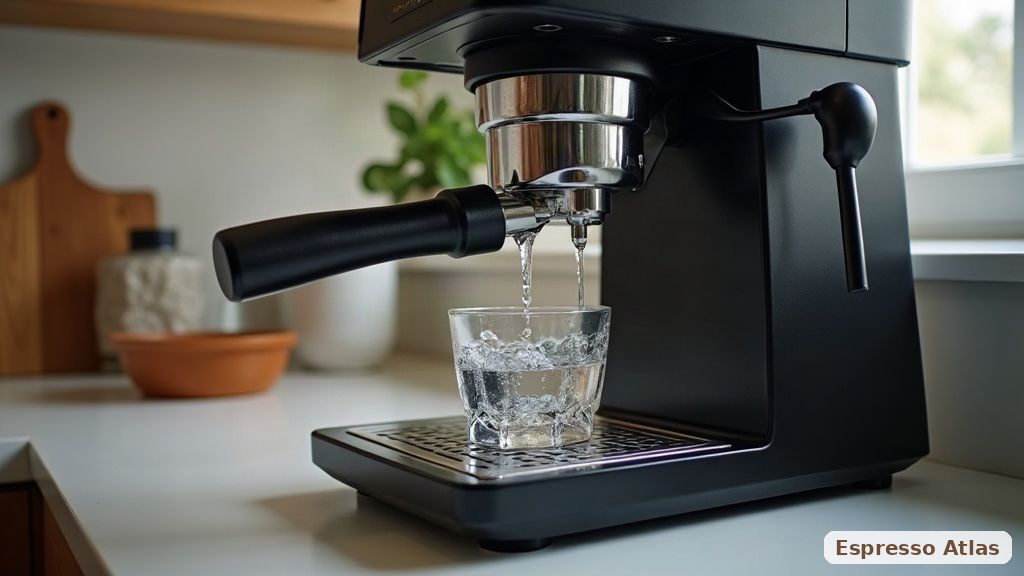
Espresso is mostly water by weight — the extracted coffee solids make up only a small percentage of what’s in the cup. Home baristas will happily spend $600 on a grinder and $30 on a bag of beans, then pour whatever comes out of the kitchen tap into the reservoir. Water is the single biggest ingredient in your cup, and it’s also the ingredient most likely to be silently killing the taste — and shortening the machine’s life. Once you understand what’s actually in tap water, the fix is simple.
What’s in your water and why it matters
Tap water isn’t just H₂O — it carries dissolved minerals, mainly calcium and magnesium (what people call “hardness”), plus bicarbonates (which buffer acidity), and small amounts of other stuff (chlorine, sodium). Each of these interacts with coffee differently:
- Calcium and magnesium help extract flavor compounds from the grounds — a little is actually good, so ultra-pure water tastes flat.
- Bicarbonate buffers acidity — too much and your espresso tastes muted, dull, chalky.
- Chlorine oxidizes flavor and creates off-notes.
- All minerals combined eventually deposit inside your machine as scale — the crusty buildup that clogs boilers, steam wands, and heaters.
So the goal isn’t zero minerals — it’s the right amount. Too soft and coffee tastes weak; too hard and it tastes muted, plus you’re paying scale off the boiler.
The SCA target (and what it means)
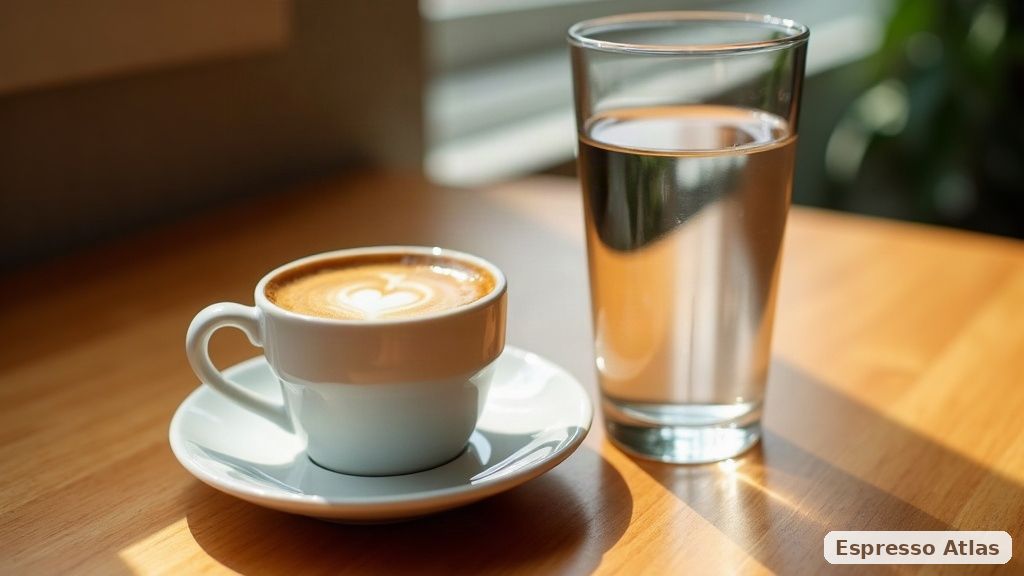
The Specialty Coffee Association publishes a widely-referenced target range for brewing water. Practically that means water with moderate hardness dominated by calcium, low bicarbonate, and near-zero chlorine. Most municipal tap water fails on at least one: either it’s too hard, too buffered by bicarbonate, or heavy on chlorine, or all three.
| Water source | Typical issue | Effect on espresso |
|---|---|---|
| Hard tap water | High Ca/Mg + bicarbonate | Muted flavor + rapid scaling |
| Softened water (salt softener) | Sodium swapped in | Salty/flat taste; still scales inside |
| Distilled / RO | Near-zero minerals | Weak, flat extraction; can also corrode brass parts |
| Bottled "spring" | Highly variable | Some brands work, most don't |
| Filtered (activated carbon) | Removes chlorine, keeps minerals | Good; helps taste, does not stop scale |
How can I tell what my water is like without a lab test?
Two quick checks:
- Kettle scale. If the inside of your electric kettle has crusty white deposits, your water is hard. Scale in the kettle = scale in the espresso machine boiler.
- A cheap TDS meter ($10–15) reads total dissolved solids in ppm. It’s a rough proxy (TDS ≠ hardness exactly, since it includes sodium and other solids), but a high reading on tap water usually correlates with hardness worth addressing.
Neither replaces a real test, but they answer “do I have a problem?” in two minutes.
The practical fix, ranked by effort
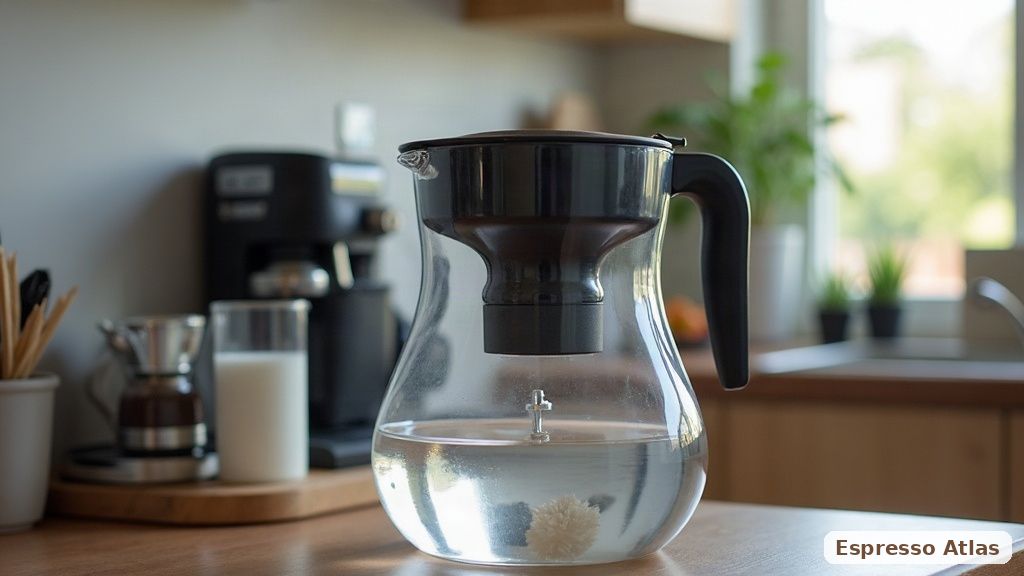
- Activated carbon filter (Brita/pitcher or in-line). Cheapest step — removes chlorine and improves taste, but does not reduce hardness. Do this even if you do nothing else.
- Mix filtered tap with distilled water. For hard water, a 1:1 or 2:1 filtered-to-distilled mix drops hardness into a workable range without needing lab-precision water.
- Buy purpose-brewed water. Some brands sell water formulated to SCA targets. Works, but the ongoing cost adds up.
- DIY mineral concentrates. Small kits let you add measured minerals to distilled water for close-to-ideal water. Best taste-to-cost ratio if you’re geeky about it.
Whichever you pick, run some through the machine before each session and descale on schedule anyway — no water is truly scale-free at espresso temperatures. Our cleaning and descaling guide covers the routine.
Is bottled water a good shortcut?
Sometimes. Not all “spring water” is equal — the mineral profiles vary wildly and some brands are actually harder than tap. Read the mineral panel on the bottle if you rely on it, and avoid anything marketed as “high mineral” or “mineral-enriched”.
Distilled water alone?
Don’t. Zero-mineral water tastes flat because there’s nothing to extract with, and can also leach small amounts of metal from brass and copper components in your machine over time. Use it as a mixing base, not straight.
What water changes vs what it doesn’t
Water fixes the flavor problems it can fix — dullness from bicarbonate, chlorine off-notes, scale-clogged boilers. It doesn’t fix an under-extracted or over-extracted shot; that’s still about grind and dose (see our grind size guide and our bitter-or-sour fix). Water is the ingredient behind the ingredients — the ceiling on how good your espresso can taste.
📚 Related In-Depth Analysis
- Compare findings with our guide on Best Espresso Machine For Beginners.
- Compare findings with our guide on Espresso Machine Vs Coffee Maker.
📚 Related In-Depth Analysis
- Compare findings with our guide on Espresso Bar Pressure Explained.
- Compare findings with our guide on Why Is My Espresso Bitter Or Sour.
🔧 Interactive Planning Tool
Need exact measurements for your setup? Use our Portafilter & Tamper Tolerance Engine to Check exact millimeter tolerance between your basket and tamper diameter.
The bottom line
Espresso is mostly water, and most tap water is at least partly wrong for it. Start with an activated carbon filter to strip chlorine; if your area is hard, cut with distilled water to bring the mineral load into a moderate range. Skip pure distilled, softened, or “high mineral” bottled. Do this and every other espresso variable you’ve fiddled with will suddenly reach further — because for the first time, the biggest ingredient is right.