Espresso Grind Size: The #1 Fix for Bad Shots (2026)
As an Amazon Associate I earn from qualifying purchases. Prices and availability are accurate as of the date/time indicated and are subject to change.
🔍 How this guide was put together (Editorial Standards)
This guide compares options using published manufacturer specifications, patterns in publicly visible owner reviews, and reputable expert sources. We do not operate a physical testing lab; see our how-we-research page for details.
EDITOR'S PICKS
Top Picks


If your espresso tastes wrong, the first thing to change is almost never the machine or the beans — it’s the grind size. Grind is the biggest single lever you have over extraction, and most bad shots at home come down to a grind that’s too coarse or too fine. Learn to read the shot and adjust the grind, and you can fix sour, bitter, weak, and gushing shots without buying anything.
Why grind size matters more than anything else
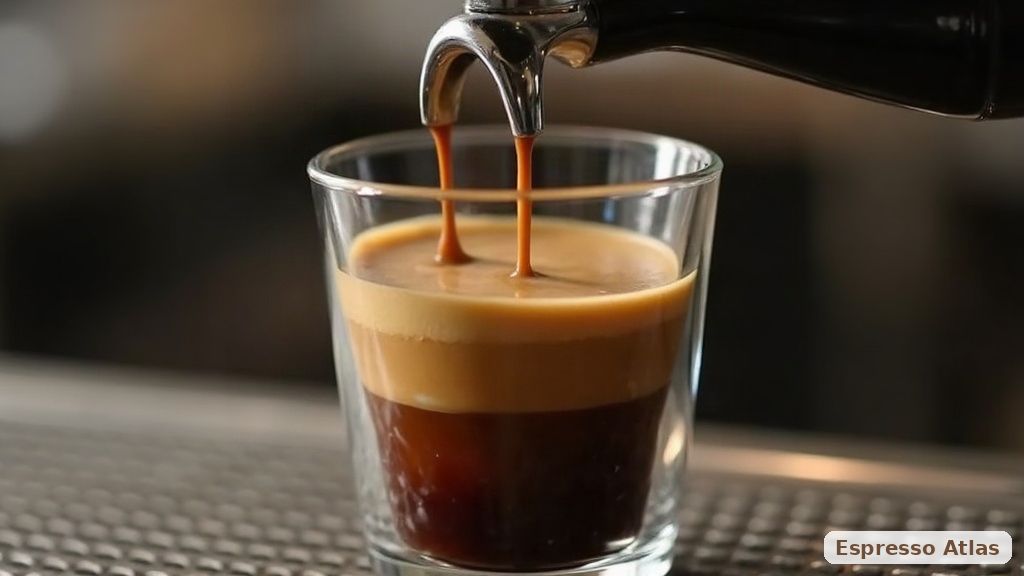
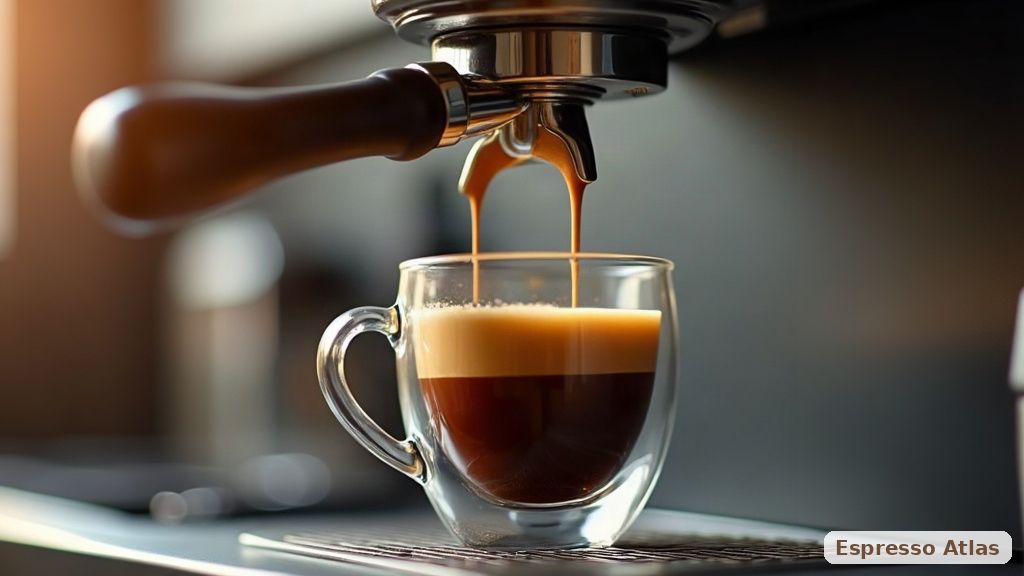
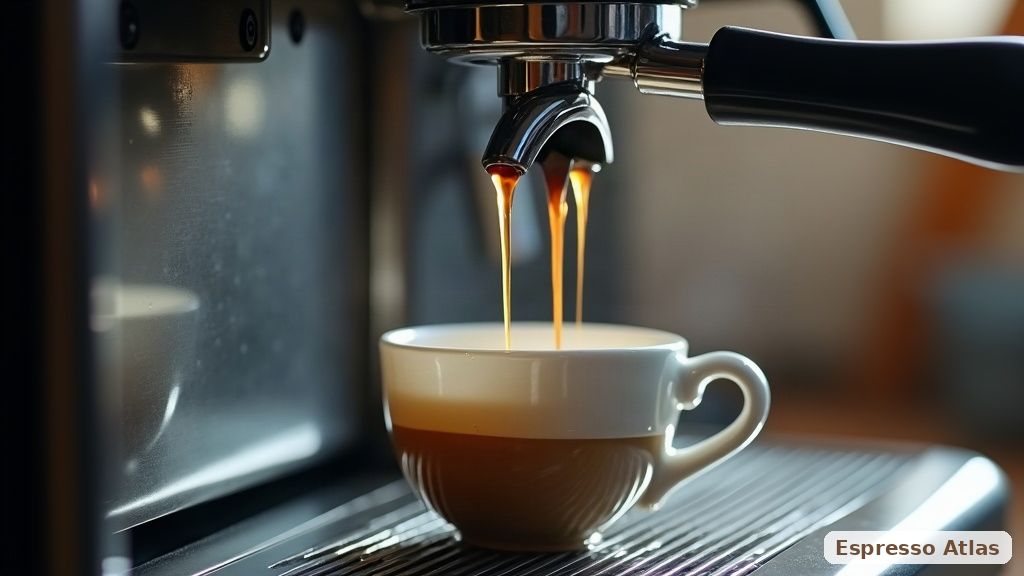
Espresso forces hot water through a compressed puck of coffee in about 25–30 seconds. How fast the water gets through — and therefore how much flavor it extracts — is controlled mostly by how finely the coffee is ground:
- Too coarse → water rushes through → under-extraction → sour, thin, weak, pale crema.
- Too fine → water struggles through → over-extraction → bitter, harsh, dark, dry finish.
- Just right → ~25–30 sec for a 1:2 shot → balanced, sweet, syrupy.
Grind is also why espresso needs a burr grinder, not a blade one: burrs produce uniform particles so water flows evenly, while blades make dust-and-boulders that channel. This is a big reason machines with a built-in burr grinder simplify the learning curve.
How to dial in your grind
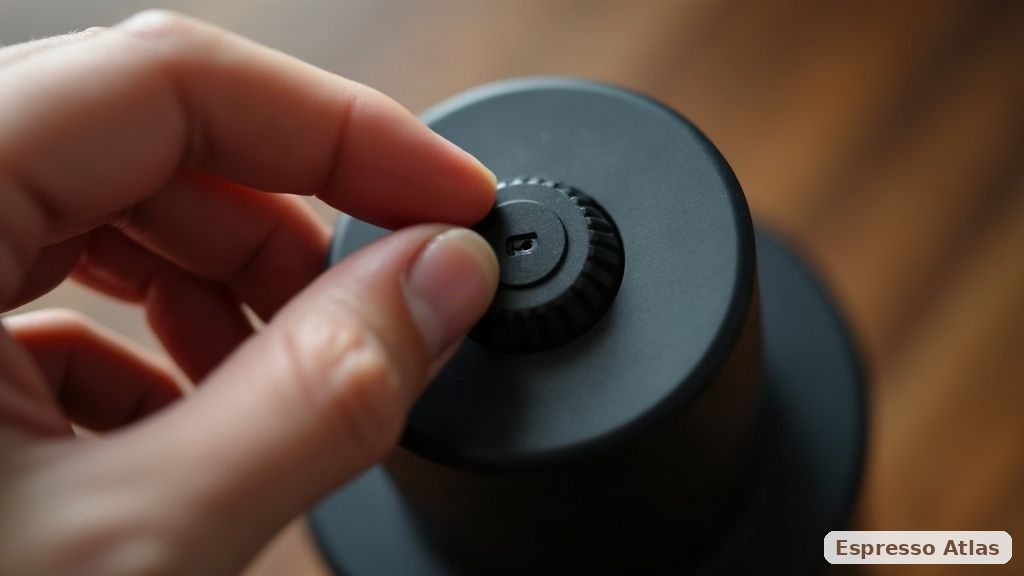
The numbers below are common starting points baristas use, not fixed rules — your beans, machine, and taste will shift them. Change one variable at a time and read the result:
| Shot symptom | Likely cause | Adjust grind |
|---|---|---|
| Runs too fast (<20s), sour, thin | Under-extraction | Grind FINER |
| Drips slowly (>35s), bitter, dry | Over-extraction | Grind COARSER |
| Sour AND weak | Too coarse + low dose | Finer, check dose |
| Bitter AND harsh | Too fine / too hot | Coarser |
| Squirts sideways / uneven | Channeling (uneven puck) | Fix distribution + tamp, then grind |
How do I know if my grind is too fine or too coarse?
Time and taste the shot. Pull a standard 1:2 ratio (e.g. 18 g in → 36 g out) and watch the clock. If it’s done in under ~20 seconds and tastes sour, the grind is too coarse — go finer. If it takes over ~35 seconds and tastes bitter, it’s too fine — go coarser. Sour and bitter are the two directions; grind is how you steer between them. Our bitter-or-sour fix guide goes deeper on reading taste.
Why does the same grind setting change day to day?
Because grind interacts with bean freshness, roast, and humidity. Fresh beans degas more CO₂ and can slow flow; darker roasts are more brittle and grind finer at the same setting; humid days clump grounds. That’s why baristas re-dial slightly whenever they open a new bag — it’s not you doing something wrong. Keep dose and tamp consistent so grind stays the one variable you’re tuning. Beginners can start from our beginner machine guide, which pairs a forgiving setup with this dial-in method.
Does grinder quality really matter that much?
Yes. A grinder that can’t adjust finely enough — or produces inconsistent particles — caps how good your espresso can get, no matter how nice the machine. If you’re choosing between spending on the machine or the grinder, the grinder often gives the bigger taste jump. The super- vs semi-automatic comparison also factors in how each type handles grinding for you.
📚 Related In-Depth Analysis
- Compare findings with our guide on Best Espresso Machine For Beginners.
- Compare findings with our guide on Why Is My Espresso Bitter Or Sour.
📚 Related In-Depth Analysis
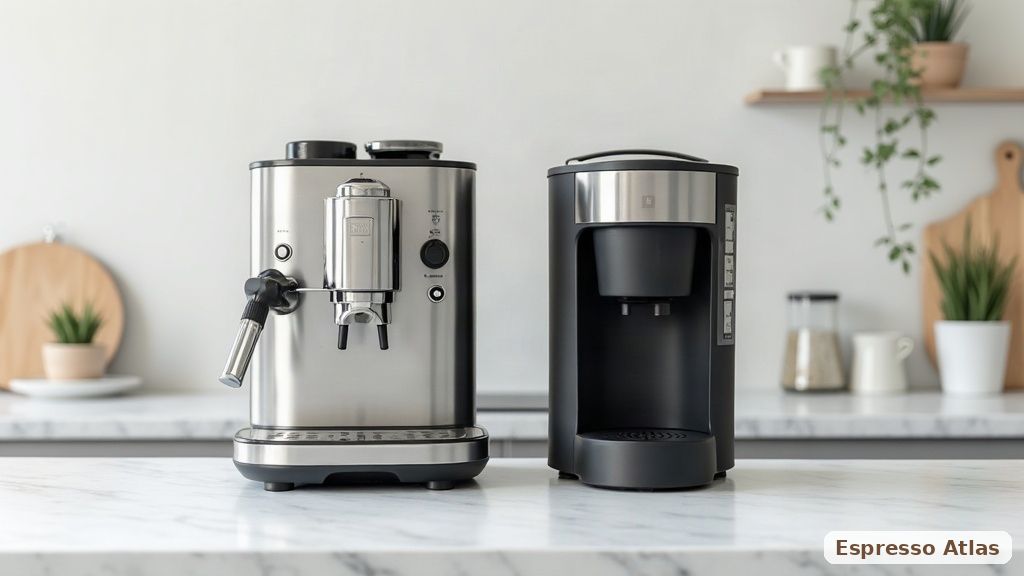
- Compare findings with our guide on Espresso Machine Vs Coffee Maker.
- Compare findings with our guide on Why Is My Espresso Bitter Or Sour.
🔧 Interactive Planning Tool
Need exact measurements for your setup? Use our Portafilter & Tamper Tolerance Engine to Check exact millimeter tolerance between your basket and tamper diameter.
The bottom line
When a shot tastes off, adjust the grind first: finer for sour/fast shots, coarser for bitter/slow ones, changing one variable at a time and timing a 1:2 shot at 25–30 seconds. Use a burr grinder for uniform particles, and re-dial when you open new beans. Master grind and you’ve mastered the single biggest lever in espresso — most “bad machine” complaints are really just a grind that was never dialed in.