Best Espresso Machine With Built-In Grinder (2026): 3 Machines Compared for Real Home Use
As an Amazon Associate I earn from qualifying purchases. Prices and availability are accurate as of the date/time indicated and are subject to change.
The short answer
If you only want one recommendation: PHILIPS 5500 Series Fully Automatic Espresso Machine with LatteGo. If you want espresso drinks with the least manual effort — one-button lattes, integrated milk system, ceramic grinder — the Philips 5500 gets you there without a learning curve. Buy this one if you're picking an espresso machine as an APPLIANCE, not a hobby.
Check price on Amazon → How we picked: This guide compares options using published
specifications, verified owner-review patterns and reputable expert testing.
We label clearly what is hands-on vs research-based, and never present others'
testing as our own.
Our top picks
| Rank | Product | Name | Why we picked it | Buy |
|---|---|---|---|---|
| Top pick | 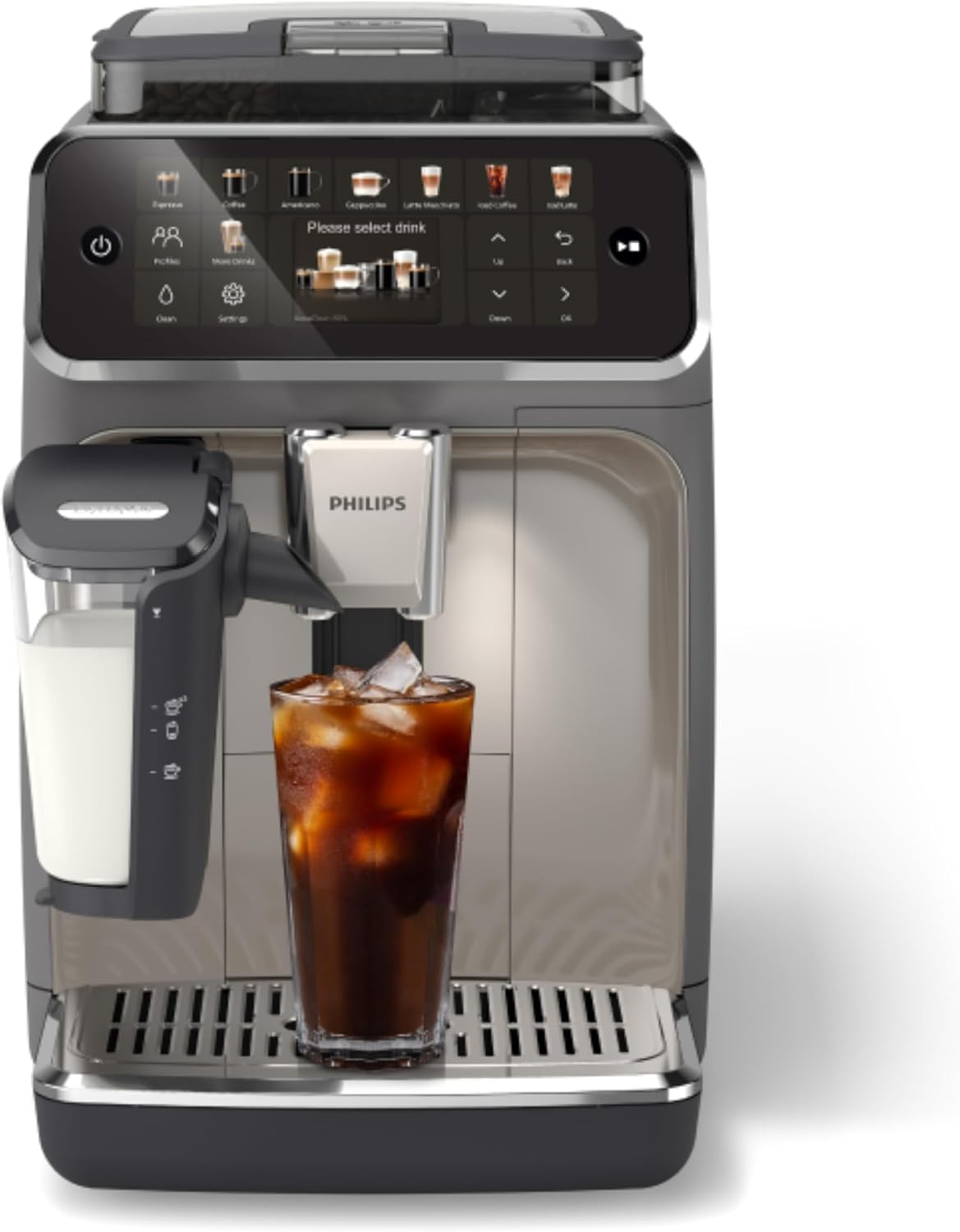 | PHILIPS 5500 Series Fully Automatic Espresso Machine, LatteGo Milk System | Best for one-button convenience — fully automatic grinding, brewing, milk frothing. Skip this if you want to dial in shots yourself. | Check price |
| Runner-up |  | Gevi 20 Bar Espresso Machine with Conical Burr Anti-Static Coffee Grinder | Best for the semi-auto learner — conical burr grinder + 20 bar pump means you can actually learn espresso craft without buying a separate grinder later. | Check price |
| Also great |  | Ninja Luxe Café Premier 3-in-1 Espresso, Drip Coffee & Cold Brew | Best if espresso is only one of several brew methods you use — the 3-in-1 covers espresso, drip, and cold brew from one countertop footprint. | Check price |
📑 Table of contents
- Why grind consistency matters more for espresso than any other brew method
- Fully automatic vs. semi-automatic — the biggest decision, not just a feature difference
- Who should buy which — decision framework
- What’s NOT in any of these machines (and might matter to you)
- Maintenance reality — what you’re signing up for
- Common first-year mistakes with any built-in grinder machine
- Comparison
- Related guides
The single biggest flavor difference between a $50 pod machine and a $600 real espresso machine isn’t the pressure or the boiler — it’s whether the coffee was ground within the last 30 seconds before extraction. Pre-ground coffee starts losing aroma compounds almost immediately, and by the time a bag of pre-ground reaches your cup, most of the character is already gone. A machine with a built-in grinder closes that gap to seconds, which is why “espresso machine with grinder” is a genuinely different product category from “espresso machine” alone.
But not all built-in grinders are equal, and the machines that pair them with different levels of automation solve different problems. Below we cover what actually matters, then three verified picks that each target a different type of buyer.
Why grind consistency matters more for espresso than any other brew method
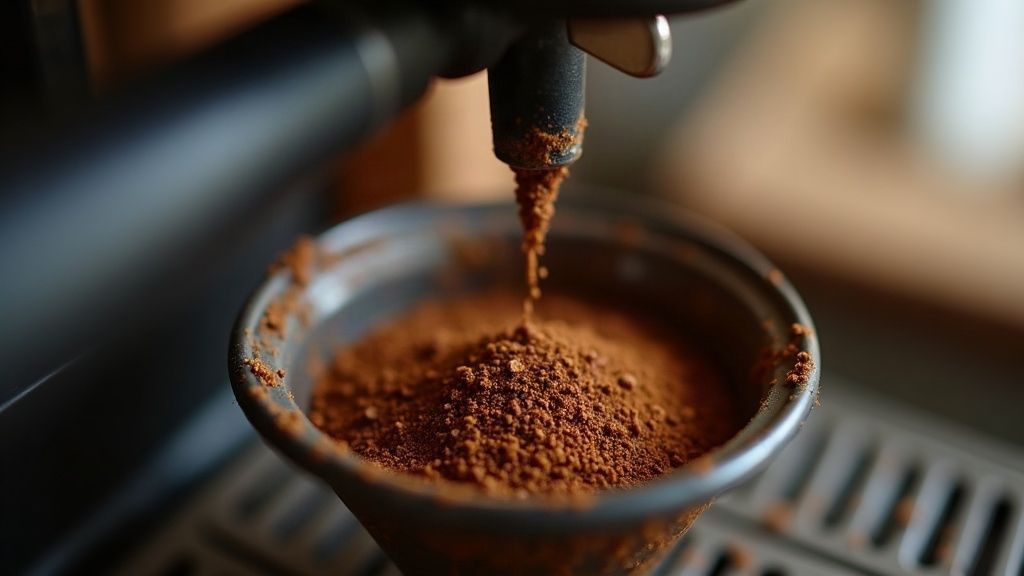
Drip coffee and French press give the water a long time (2-5 minutes) to extract flavor from coarser grounds. Espresso extracts in 25-30 seconds through very fine, densely-packed grounds — which means small differences in particle size cause big differences in extraction. Some grounds over-extract (bitter, harsh) while others under-extract (sour, thin) in the same shot if grind consistency is off.
This is why a burr grinder matters far more for espresso than for other methods. A blade grinder chops beans unevenly — some fine dust, some coarse chunks, all mixed together. A burr grinder crushes beans between two surfaces at a set gap, producing particles within a narrow size range. The Gevi pick above specifically lists conical burr, which is worth calling out because “built-in grinder” alone doesn’t guarantee burr technology.
Conical burrs (like the Gevi) produce slightly less uniform particle size than flat burrs found in higher-end grinders, but the difference is only meaningful once you’re chasing café-level shot quality. For home use, conical burr is the right price/performance sweet spot.
Fully automatic vs. semi-automatic — the biggest decision, not just a feature difference
The Philips 5500 pick is a fully automatic machine — you press a button labeled “espresso” or “cappuccino” and the machine grinds, doses, tamps, brews, and (with the LatteGo milk system) froths and pours milk into your cup. You get consistent drinks every time, no skill required. The tradeoff: you cannot adjust grind fineness, dose, tamp pressure, or extraction time to a specific bean or roast. You get what the machine is programmed to make.
The Gevi is semi-automatic — you control grinding, dosing, tamping, and start/stop timing manually, while the machine provides consistent water pressure (20 bar rating) and temperature. This gives you the tools to dial in a specific bean, but requires learning the workflow. Expect 2-3 weeks of daily practice before your shots reliably taste better than what you’d get from a fully auto.
The Ninja Luxe Café is a 3-in-1 hybrid — it handles espresso in a semi-auto style but also does drip coffee and cold brew, so buying it is really a decision about format variety rather than espresso-only depth.
Who should buy which — decision framework
Buy the Philips 5500 if:
- Espresso is a daily routine, not a weekend project
- You want milk drinks (lattes/cappuccinos) without learning to steam milk
- Multiple people in the household will use it — consistency matters more than customization
- You’d feel guilty spending time on tamping/grinding when you could just push a button
Buy the Gevi if:
- You’re interested in espresso as a craft, not just a beverage
- You’ve owned a semi-auto or want to learn one
- You plan to buy specialty beans and dial in shots to each roast
- You accept a learning curve in exchange for better shots long-term
Buy the Ninja Luxe Café if:
- Your household drinks multiple coffee formats (drip in the morning, espresso in afternoon, cold brew in summer)
- Countertop space is limited and you can’t fit two separate machines
- Espresso quality is a “nice to have,” not the primary reason you’re buying
What’s NOT in any of these machines (and might matter to you)
None of the three include a pressure gauge on the group head — a feature enthusiasts use to verify extraction pressure hit the 9-bar sweet spot. If you want to see real-time extraction data, look at machines specifically listing “pressure gauge” or “PID temperature control” (typically starting around a higher price tier than any of these three).
None include an integrated water softener — hard water shortens espresso machine lifespan significantly (mineral buildup in the boiler and portafilter). If your water is hard, factor in either a pitcher filter (Brita/similar) or a plumbed-in softener as part of your total setup cost regardless of which machine you pick.
The Philips has a ceramic grinder burr rather than steel — ceramic runs cooler (better for preserving bean flavor from heat friction) and lasts longer, but chipping/cracking is possible with tramp objects (small stones in unwashed beans). Steel burrs on the Gevi/Ninja are more forgiving but conduct more heat.
Maintenance reality — what you’re signing up for
All three machines require daily wipe-down of the portafilter and drip tray, weekly backflushing (semi-auto only) or automatic cleaning cycle (fully auto), and monthly descaling depending on water hardness. The Philips fully-auto automates most of this via prompts on its display; the Gevi expects you to know when it’s time (there’s no descaling reminder). If maintenance discipline isn’t your strength, the automatic-prompt approach on the Philips is genuinely worth the price premium.
Every espresso machine has a lifespan governed more by scale buildup than by mechanical wear. A well-descaled machine can last 10+ years; a neglected one starts underperforming (poor pressure, uneven temperature, stuck valves) within 2-3.
Common first-year mistakes with any built-in grinder machine
-
Using pre-ground coffee anyway — defeats the entire purpose of buying an integrated grinder. The grinder is only useful if you feed it whole beans.
-
Never adjusting grind size — most machines ship with a mid-range grind setting. Different beans (light roasts especially) need finer grinds than the default. If your shots pull too fast (under 20 seconds) or too slow (over 35 seconds), grind adjustment is the fix, not water pressure.
-
Skipping the temperature warmup — pulling a shot right after turning the machine on gives you cool water and under-extraction. All three of these machines need 5-10 minutes to reach stable temperature before the first shot of the day.
-
Not measuring dose — even fully auto machines let you adjust dose grams. Weighing your dose (a $15 kitchen scale) matters more than tamping pressure for shot consistency.
Comparison
| Model | Automation | Grinder | Best fit |
|---|---|---|---|
| PHILIPS 5500 Series | Fully automatic + auto milk | Ceramic burr, adjustable | One-button daily drinks |
| Gevi 20 Bar | Semi-automatic | Conical burr | Learning espresso as craft |
| Ninja Luxe Café Premier | Multi-format | Built-in (type unspecified in listing) | Espresso + drip + cold brew household |
Related guides
- Manual lever espresso machines: what to know before buying
- Automatic vs. manual espresso machines